Genitourinary Syndrome of Menopause
- a common but underdiscussed condition -
menopause brings a series of natural changes in a woman's body, many of which are associated with the progressive decline in estrogen levels. Although hot flashes and sleep disturbances are the most frequently mentioned symptoms, there is a category of manifestations that significantly affects quality of life but is discussed much less. These are grouped under the name sindrom genito-urinar al menopauzei.
Studiile shows that more than half of menopausal women present with symptoms associated with this condition, but many of them do not seek medical help, mistakenly believing that these changes are inevitable and must be accepted as part of the aging process.
Ce este sindromul genito-urinar al menopauzei?
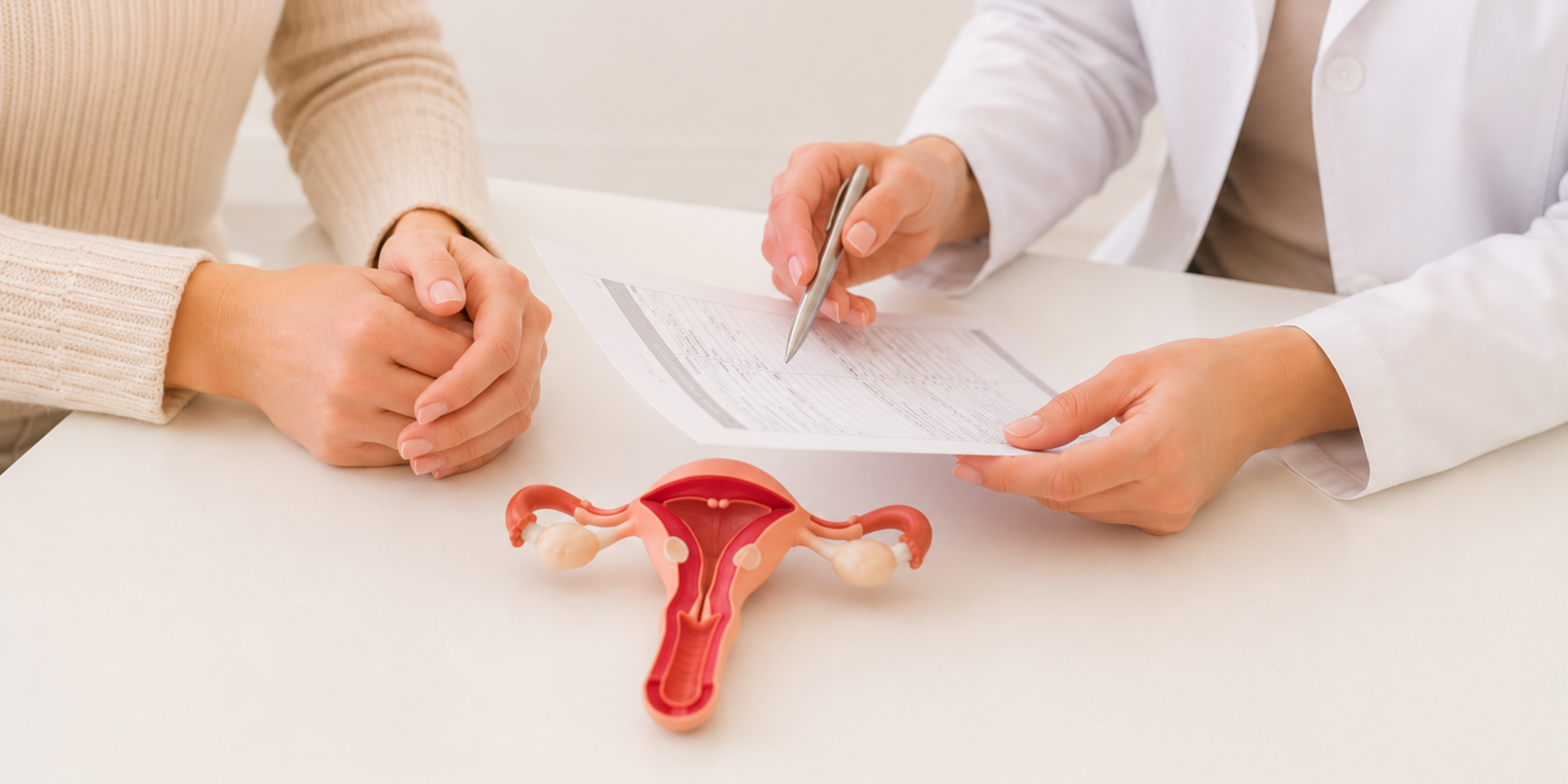
Genitourinary Syndrome of Menopause refers to a group of symptoms that occur as a result of estrogen deficiency in the lower genital and urinary tract. The decrease in estrogen concentration causes structural changes in the vaginal mucosa, vulva, urethra, and bladder, leading to progressive symptoms that tend to worsen over time if left untreated.
Unlike hot flashes, which often improve spontaneously after a few years, genitourinary symptoms tend to persist and progress.
What are the most common symptoms?
Manifestations vary from woman to woman, but the most common include vaginal dryness, a burning or irritated sensation, itching, discomfort during daily activities, and pain during sexual contact.
Many patients also notice urinary changes such as urgency, frequent urination, burning during urination, or recurrent urinary infections. These symptoms are often treated separately, without recognizing the common cause represented by estrogen deficiency.
In addition to the physical impact, genitourinary syndrome of menopause can affect relationships, self-confidence, and overall quality of life.

Many patients also notice urinary changes such as urgency, frequent urination, burning during urination, or recurrent urinary infections. These symptoms are often treated separately, without recognizing the common cause represented by estrogen deficiency.
In addition to the physical impact, genitourinary syndrome of menopause can affect relationships, self-confidence, and overall quality of life.

Why does this condition occur?
Estrogenul plays an essential role in maintaining the health of genital tissues. It helps hydrate the vaginal mucosa, maintain tissue elasticity, and preserve a healthy vaginal microbiome.
With instalarea menopauzei, estrogen levels drop significantly. The vaginal mucosa becomes thinner, more fragile, and less vascularized. Natural secretion production decreases, and the vaginal pH changes, promoting the onset of irritation and infections.
These changes do not appear suddenly but develop progressively, which is why many women do not immediately associate them with menopause.
With instalarea menopauzei, estrogen levels drop significantly. The vaginal mucosa becomes thinner, more fragile, and less vascularized. Natural secretion production decreases, and the vaginal pH changes, promoting the onset of irritation and infections.
These changes do not appear suddenly but develop progressively, which is why many women do not immediately associate them with menopause.
How is it diagnosed?
Diagnosticul is mainly clinical and is based on the symptoms described by the patient and a gynecological examination. In many cases, complex investigations are not necessary, and early recognition of symptoms allows for the initiation of tratament adecvat before more severe changes occur.
It is important for symptoms to be discussed openly with the doctor, because many patients avoid mentioning issues such as vaginal dryness or pain during sexual contact.
What treatment options are available?
Tratamentul depinde de severitatea simptomelor and on the istoricul medical of the patient. In mild forms, regularly used vaginal moisturizers and lubricants may be sufficient.\nFor moderate or severe symptoms, terapiile locale cu estrogeni is one of the most effective treatment options. Local administration allows a direct effect on the vaginal mucosa, with reduced systemic absorption compared to systemic hormone therapy.